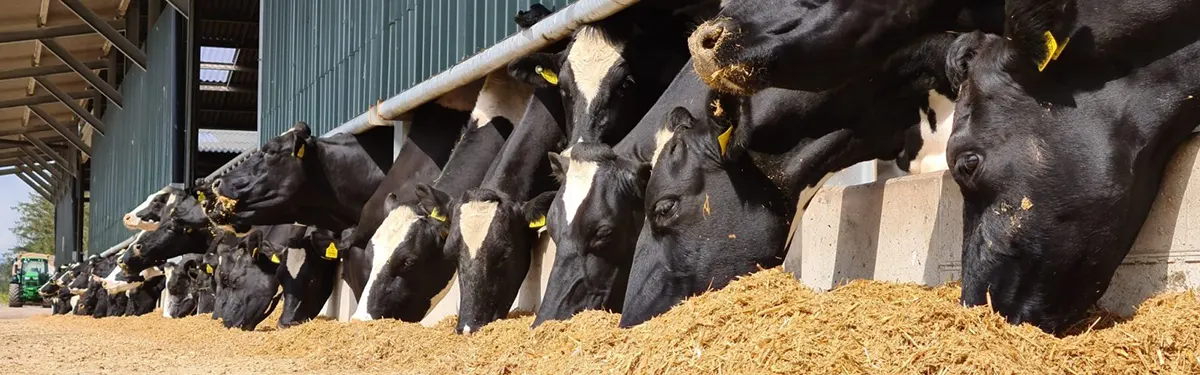
As grass quality varies from first to second rotation, a dietary imbalance can occur if not managed carefully. Matching the buffer feed to the nutritional characteristics of the grass can have multiple benefits for the herd and is key to managing the variation in the quality of the grazing platform.
Buffer feeding to bridge the nutritional gap
Buffer feeding allows farmers to complement the available, variable grass to meet the cow’s nutritional requirements throughout the year while keeping the cow’s diet balanced.
The ability to buffer feed can make up the shortfall in overall dry matter intake (DMI) targets and supports rumen function, helping achieve good milk quality while maximising solids and body condition.
Some negative energy balance (NEB) & body condition score (BCS) loss is inevitable after calving, as maximum energy output through milk production occurs before maximum DMI is reached. Accurate buffer feeding can help to minimise this loss.
Minimising NEB will lead to higher milk solids, reduce BCS loss and enhance herd fertility.
Insufficient energy in a cow’s diet can result in low milk protein, low milk yields, poor fertility as well as potential metabolic issues and a loss of BCS. The ability to buffer feed can make up the shortfall in overall DMI targets, especially when dry matter is low in grass.
Remember, for every 1% reduction below 18% in grass dry matter, grass intake is reduced by 0.33 kg DM.
Buffer feed should supplement the grass quality being offered to balance the diet for Fibre, Dry Matter, Protein and Energy to build a matching buffer feed that will drive milk yield, butterfat and milk protein production.