Cold weather is stressful for calves and those that are exposed to the cold are predisposed to pneumonia. That’s why managing temperature in the first weeks of life is one of the most important parts of calf rearing. Young calves cannot regulate body heat efficiently and even small drops in ambient temperature can place stress on their immune system, growth and overall health.
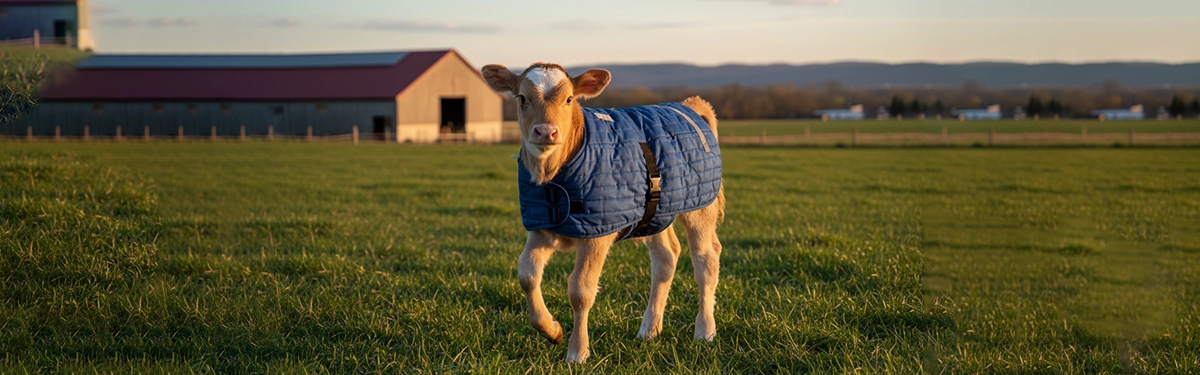
Calf jackets are a simple but highly effective tool for protecting calves during this vulnerable period — but they must be used correctly. This guide explains when to use calf jackets, how they work and the practical steps farmers can take to reduce cold stress in Irish calf sheds.
Understanding the Calf’s Thermoneutral Zone
A calf’s thermoneutral zone — the temperature range in which it can maintain body heat without using extra energy — is 15–25°C.
When temperatures fall below 15°C, the calf begins diverting energy away from growth and immunity to simply stay warm. In Irish conditions, spring temperatures frequently fall below this threshold, especially at night or in naturally ventilated sheds.
Calves under three weeks of age are at highest risk because:
- They have very little fat cover.
- Their coat is thin and provides minimal insulation.
- Their starter intake is low, so they are not generating enough internal heat.
This combination makes maintaining consistent warmth essential.
Why Calf Jackets Are So Effective
Calf jackets provide an extra layer of insulation that helps young calves conserve heat and reduce the energy required for maintaining body temperature. When a calf is not burning energy to stay warm, that energy can instead support:
- Stronger immunity
- Higher growth rates
- Better feed efficiency
- Improved vigour and overall health
The more consistent the calf’s temperature, the more stable its performance during the first three weeks.
When to Put Calf Jackets On
Calf jackets are most effective when used from birth and kept on consistently until the calf can regulate its temperature more reliably.
Best practice:
- Fit the jacket as soon as the calf is dry and settled.
- Keep jackets on continuously for at least the first three weeks.
- Avoid removing jackets during the day and refitting them at night — temperature changes create stress and defeat the purpose.
Once fitted, jackets should remain on until calves show strong starter intake, have developed a thicker coat and are coping well with the shed temperature.
Choosing the Right Calf Jacket
Not all jackets offer the same level of performance. When selecting a jacket, consider:
- Breathable, waterproof outer fabric — prevents draughts and dampness.
- Plastic buckles instead of Velcro — easier to clean, more durable and less likely to trap dirt.
- Adjustable straps — ensure a snug, secure fit that prevents warm air escaping.
- Good insulation — adequate padding is essential for heat retention.
A well-fitted jacket should allow the calf to move freely without slipping or rubbing.
Hygiene: Washing and Drying Jackets Properly
Jackets can easily become carriers of bacteria if not washed correctly.
- Wash jackets at 70–80°C to kill pathogens.
- Allow them to dry fully before reusing.
- Label jackets or rotate them to ensure each is cleaned between calves.
Clean jackets significantly reduce the spread of scour-causing organisms in the calf shed.
Bedding Still Matters: The Kneel Test
Even the best calf jacket cannot compensate for poorly maintained bedding. A deep, clean straw bed allows calves to nest, trapping warm air around the body.
The kneel test is a quick and reliable check:
- Kneel on the bedding for a few seconds.
- If your knee comes up damp, the bedding is not dry enough.
When straw is limited or costly, products like bedding conditioners, lime or woodchip can help maintain a dry surface, but jackets become even more important in these systems.
Can Heat Lamps Be Used?
Heat lamps can provide additional warmth but must be used with caution:
- Only use lamps tested and approved for agricultural environments.
- Keep them at a safe height over straw bedding.
- Ensure the area beneath them does not overheat or create condensation.
A lamp should be considered supplemental — not a replacement for proper jackets and bedding.
Adjusting Nutrition in Cold Conditions
Calves burn more energy in cold weather, which means their nutritional needs increase.
During cold spells, farmers can support calves by:
- Increasing milk or milk replacer volume slightly
- Ensuring feeding temperature is consistent
- Maintaining strict accuracy when mixing replacer
Warmer calves perform better, digest feed more efficiently and maintain stronger immunity.
Outdoor and Early-Grazing Systems
Calves turned out early or kept in outdoor hutches benefit greatly from jackets, particularly during the unpredictable spring weather typical in Ireland.
However, jackets should not be:
- Removed during the day
- Refitted at night
- Taken off when calves are briefly brought indoors
Managing the Calf Shed Environment
Jackets help the calf, but the shed must also support good temperature control. Farmers should monitor:
- Draughts along passageways or at calf level
- Damp patches and poor drainage
- High humidity
- Low areas in the shed that trap cold air
- Inadequate nesting depth
A digital thermometer hung at calf height provides an accurate reading of the environment calves actually experience.
Consistent Warmth Creates Healthier, More Resilient Calves
Calf jackets are one of the simplest and most cost-effective tools for protecting young calves during the first few weeks of life. Used consistently — alongside deep bedding, accurate feeding and good shed management, they help calves conserve energy, grow better and stay healthier.
If you would like advice on optimising your calf rearing system or improving early calf health, our Specialist Nutrition team can provide practical on-farm support. Contact us today for expert guidance tailored to your farm.