Most Irish farmers don’t immediately think about heat stress when temperatures climb into the low twenties. However, dairy cows can begin experiencing heat stress much earlier than many people realise, particularly when humidity starts to rise.
Heat stress isn’t just a concern during extreme heatwaves. Even a few warm, humid days can reduce feed intake, affect fertility, lower milk production and place additional pressure on grazing cows.
The challenge is that by the time cows begin panting or milk yields start to fall, heat stress has often already been affecting performance for several days.
This is why more farmers are moving beyond simply checking the weather forecast and are starting to monitor Temperature Humidity Index (THI) instead.
What Is THI?
THI stands for Temperature Humidity Index. Rather than looking at temperature alone, it combines both air temperature and relative humidity to provide a much better indication of how comfortable or stressed dairy cows are likely to be.
Humidity plays a major role because cows rely on breathing to lose excess body heat. When humidity is high, it becomes much harder for them to cool themselves, even if the air temperature doesn’t seem particularly hot.
This means two days with exactly the same temperature can have very different effects on your herd depending on the humidity.
For this reason, THI is now widely recognised as one of the best ways to assess heat stress risk in dairy cattle.
Why Irish Dairy Farmers Should Pay Attention
Heat stress is often associated with countries that experience prolonged periods of extreme heat, but it is becoming an increasingly important issue on Irish farms.
Our climate is generally mild, but warm days combined with high humidity can create conditions where cows begin struggling to regulate their body temperature.
High-producing dairy cows are particularly vulnerable because they generate large amounts of heat through rumen fermentation and milk production. During warm weather, they must work harder to lose this excess heat while still maintaining production.
Even relatively short periods of heat stress can reduce feed intake, affect rumination and place extra pressure on fertility and milk solids.
Why Heat Stress Affects Milk Production
One of the first responses to heat stress is a reduction in feed intake. As cows become hotter, they naturally eat less in an attempt to reduce the amount of heat produced during digestion. Unfortunately, this also means they consume less energy at a time when they still need to support milk production.
Lower dry matter intake can quickly lead to:
- reduced milk yield
- lower milk solids
- poorer feed efficiency
- increased pressure on body condition
- reduced fertility performance
The effects are often seen several days after the warm weather begins, making early intervention particularly important.
Watch the Cow, Not Just the Thermometer
Rather than waiting for milk production to fall, farmers should monitor cow behaviour closely during periods of warm weather.
Some of the earliest signs of heat stress include:
- increased breathing rate
- cows standing for longer periods rather than lying down
- reduced grazing activity during the hottest part of the day
- gathering around water troughs
- reduced feed intake
- lower rumination activity
These signs often appear before production losses become obvious.
Live THI Monitoring Across Ireland
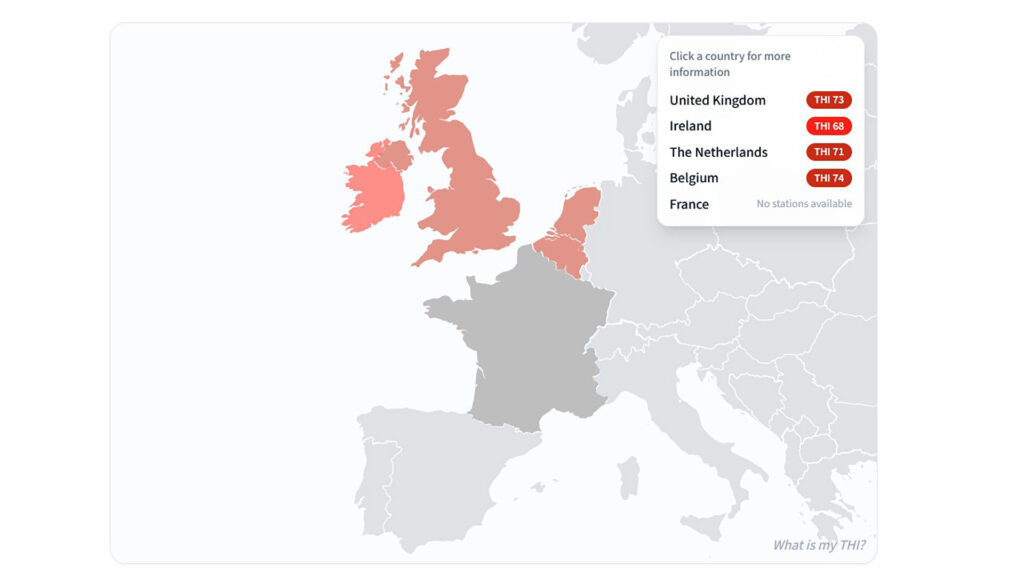
To help farmers better understand local heat stress conditions, Specialist Nutrition has partnered with Phibro Animal Health to install live THI monitoring units across the south of Ireland.
These monitoring stations provide real-time information on:
- air temperature
- humidity
- live THI
- recent THI trends
Instead of relying solely on weather forecasts, farmers can see what conditions are actually like in their area and identify periods when cows may begin experiencing heat stress.
Because weather conditions can vary considerably across the country, local monitoring provides a much more useful guide than national forecasts alone.
Check Live THI Conditions Near You
The THI Live platform allows farmers to monitor live conditions from multiple locations. Before making management decisions during warm weather, it’s worth checking the current THI reading to understand how much pressure cows may be under.
Whether you’re planning grazing, moving stock or simply monitoring herd performance, having access to live local data provides valuable insight into current conditions.
Calculate THI for Your Own Farm
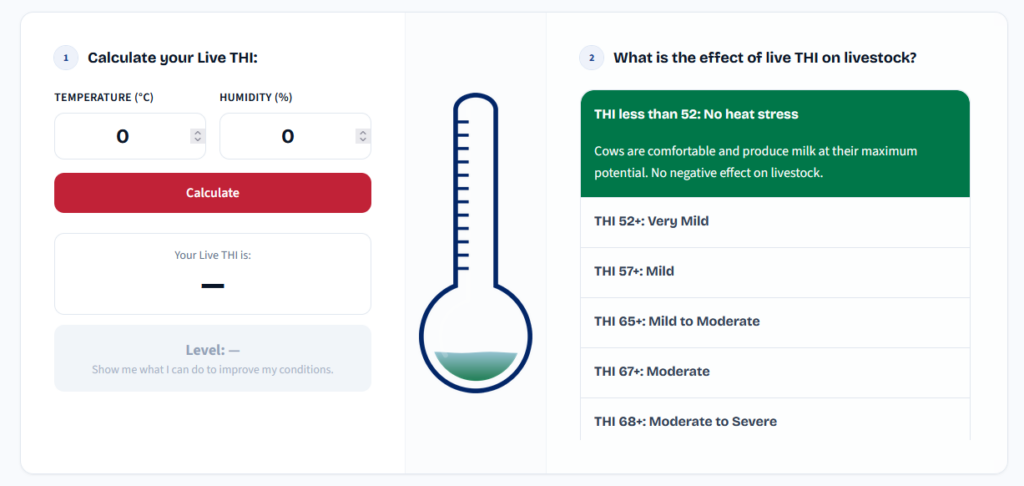
If there isn’t a monitoring station close to your location, you can still estimate heat stress risk using the THI Calculator available on the THI Live platform.
Simply enter the current temperature and humidity to calculate today’s THI and understand how conditions may be affecting your cows.
This is a simple but effective way to make more informed management decisions during warm weather.
Calculate your live Temperature Humidity Index (THI) using the THI Calculator available here: https://www.thi-live.com/en#information
Practical Ways to Reduce Heat Stress
Although farmers cannot control the weather, they can take practical steps to reduce the impact of heat stress on the herd.
Prioritise Water
Water is the single most important requirement during warm weather.
Ensure cows always have unrestricted access to clean, fresh water. Check troughs regularly, particularly after milking, and make sure water is also available in collecting yards and along roadways where possible.
Even if troughs appear clean, they should still be inspected and cleaned regularly to maintain water quality.
Minimise Unnecessary Stress
Where possible, avoid unnecessary handling during the hottest part of the day.
If cows need to be moved, carrying out tasks during the cooler morning or evening hours can help reduce additional stress.
Make Grazing Management Work for You
During periods of warm weather, consider allocating fresh grass later in the evening where practical.
This encourages grazing during cooler conditions and can help support dry matter intake when daytime temperatures are higher.
Maintaining consistent grass allocation also helps reduce unnecessary nutritional stress during periods of challenging weather.
Monitor Cow Behaviour Every Day
The cows themselves often provide the earliest warning that conditions are becoming difficult.
Monitoring breathing rates, grazing behaviour, rumination and water intake can help identify problems before milk production begins to decline.
Combining these observations with live THI data provides a much clearer picture of what is happening within the herd.
Why Monitoring THI Gives Farmers an Advantage
Many management decisions are still based solely on temperature. However, temperature only tells part of the story.
Monitoring THI allows farmers to respond before cows become visibly stressed, making it easier to protect milk production, fertility and overall herd performance.
Using real-time THI information alongside good stockmanship allows management decisions to be based on actual conditions rather than guesswork.
Final Thoughts
Heat stress isn’t just something to think about during extreme heatwaves. Warm, humid weather can quickly affect dairy cow performance, even during a typical Irish summer.
By understanding THI, monitoring local conditions and paying close attention to cow behaviour, farmers can identify potential problems earlier and take practical steps to reduce their impact.
Specialist Nutrition’s partnership with Phibro Animal Health provides Irish farmers with access to live THI monitoring, helping them make better-informed decisions throughout the grazing season.
Visit the THI Live platform to view live monitoring locations or use the THI Calculator to assess conditions on your own farm.
For practical advice on managing dairy cows during warm weather, contact the Specialist Nutrition team today.